











Delays, errors, and unhappy customers at every turn
Automates Inbound/Outbound Calls by
90%
Reduces Customer Effort Score (CES) by
80%
Brings down Errors & Inaccuracies by
50%
Decreases Average Handling Time (AHT) by
70%
Drops Call Abandonment Rates by
55%
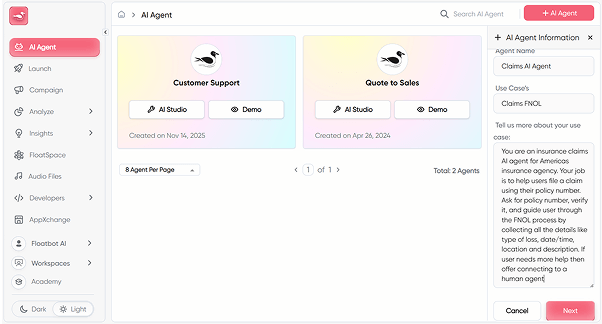
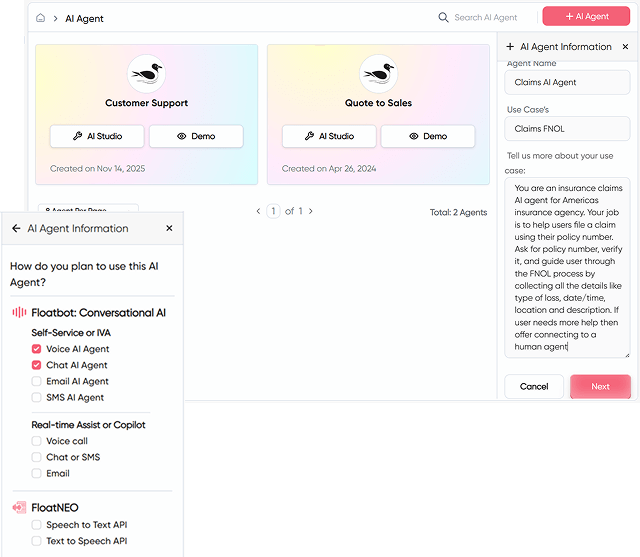
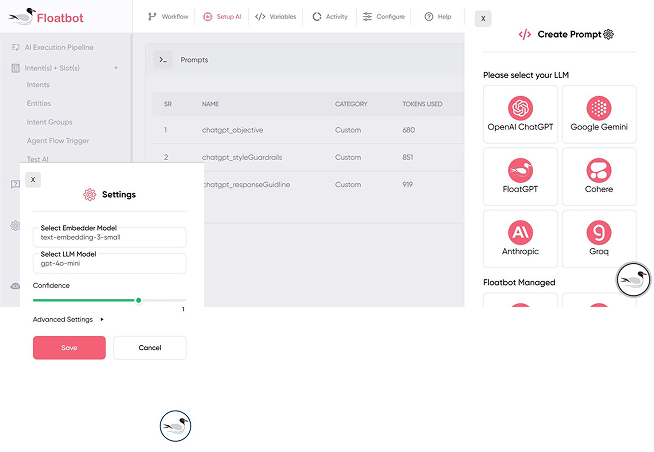
Leverage the power of Agentic AI and conversational workflows to build customized AI agents without writing a single line of code.
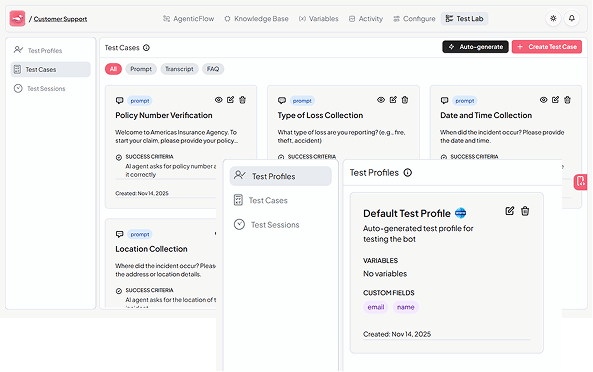
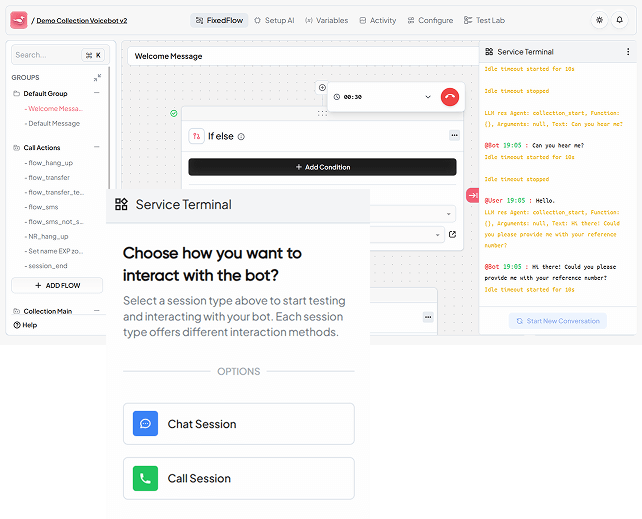
Try NowAutomate test cases with Floatbot, run simulations with just a prompt, tweak responses, and ensure your AI Agent performs flawlessly across different workflows.
Try NowConnect your Voice AI to your existing contact center, CRM, telephony, or messaging platforms seamlessly.
Try Now












Deploy with confidence and have AI Agent live in production faster than ever.
Try Now


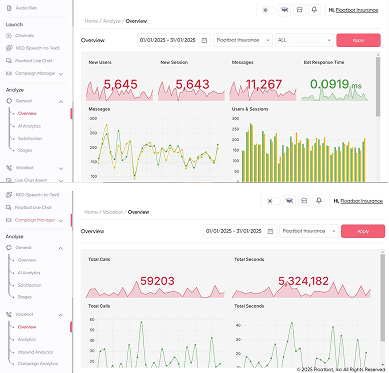
Use detailed analytics and insights to monitor interactions, identify improvement areas, and enhance your Voice AI Agent’s efficiency.
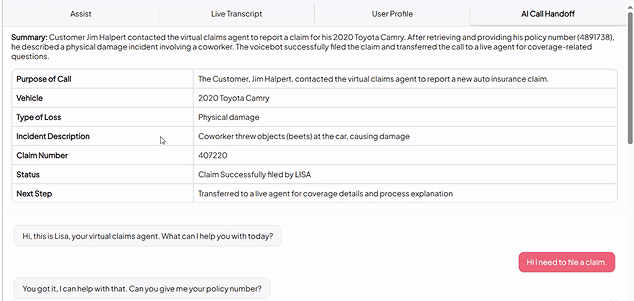
Try NowFor conversations that require human intervention, the call can be transferred to a live agent with full context retained, keeping humans-in-the-loop.
| Category | Metric | Capacity |
|---|---|---|
| Response Time | <1s | 15,000 Concurrent Calls |
| Speech Recognition | 99% | 100k calls/day |
| Uptime | 99.99% | 24/7/365 |
| Failover Time | 50ms | Auto-recovery |
| First-call Resolution | 98% | All calls |
| Recovery Time | <1s | Automatic (full-context retained) |
| Queue Time | 200ms | Peak hours |

Human Sounding with Near-Zero Latency

Smart interruption

Warm Handoff

50+ Analytics on Consumption, Goals, AI Usage, Success Metrics

Uninterrupted Multi-Modal Communication: Voice and SMS/Text/Chat/Email

Advanced Frameworks: Agentic Flow and Agent M (MultiAgent) + Fixed Flow

Advanced Frameworks: Agentic Flow and Agent M (MultiAgent) + Fixed Flow

Real-Time Application & Knowledge-Base Integration

Privately hosted & fine-tuned LLMs & Speech Models (industry-specific)

VoiceGPT to enhance Voice AI performance

Multilingual (100+ languages)

Orchestrate between 50+ LLMs and Speech Models

Voice Biometrics & 2FA Authentication

Handles Thousands of Calls Simultaneously

Voice AI Learns and Improves on the Go

Customize to Fit Your Brand
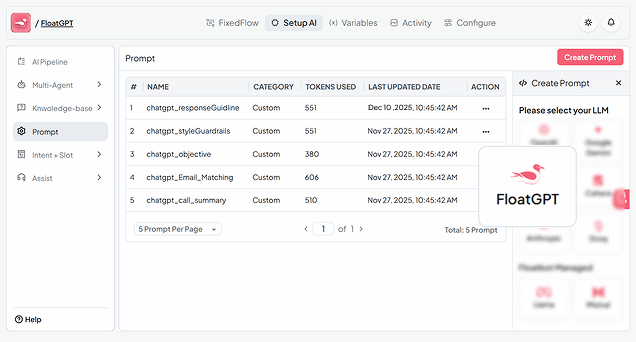
Simply give a prompt – and instantly create an AI Agent, or choose from industry-ready, pre-trained AI Agents.
Add and run test cases to validate your AI Agent’s performance.


















Floatbot’s speech recognition provides high accuracy in noisy environments, across multiple accents, and with industry-specific terminology.
Absolutely. Floatbot.AI is pre-integrated with popular CRMs, core insurance, banking, and collections systems, and supports custom APIs to enable end-to-end automation.
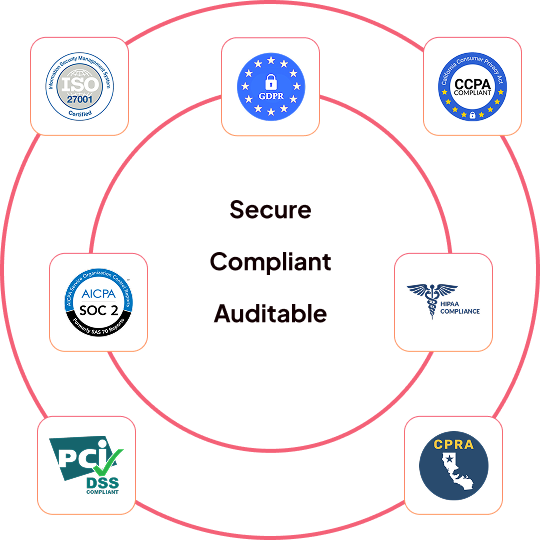
It supports enterprise-grade security, including encryption at rest and in transit, PII-safe processing, audit logs, role-based access, SOC 2 compliance, and more.
Yes. AI Agents can be customized as per your industry and use cases. You can also choose from pre-built templates and customize further to save time.
Since Floatbot.AI is a no/low-code platform, it takes very little time. Depending on your use cases, complexity, and integrations, it typically takes around 3–6 weeks to go live.
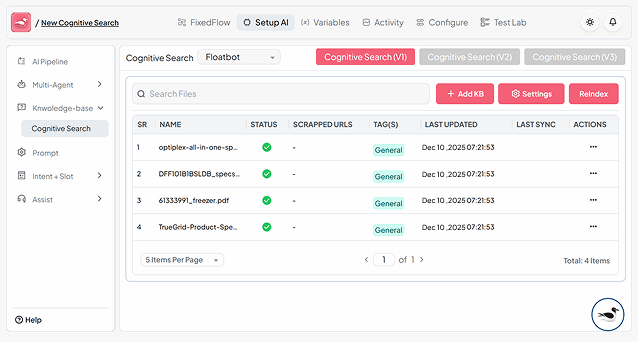
Within the Floatbot.AI dashboard, you can see comprehensive statistics for your AI Agent — including user engagement, calls, outbound campaigns, and goal-based analytics.
We provide a dedicated customer success manager, technical support, and periodic optimization by our team.